
Across industries, AI adoption is accelerating faster than most organisations can govern it. As autonomous agents and decision engines grow more capable, enterprises are shifting from broad enablement to selective governance.
The narrative that organisations should 'open the gates' to AI is giving way to a more grounded reality. The question is not how much AI can do, but how much autonomy the organisation is willing to grant and under what conditions.
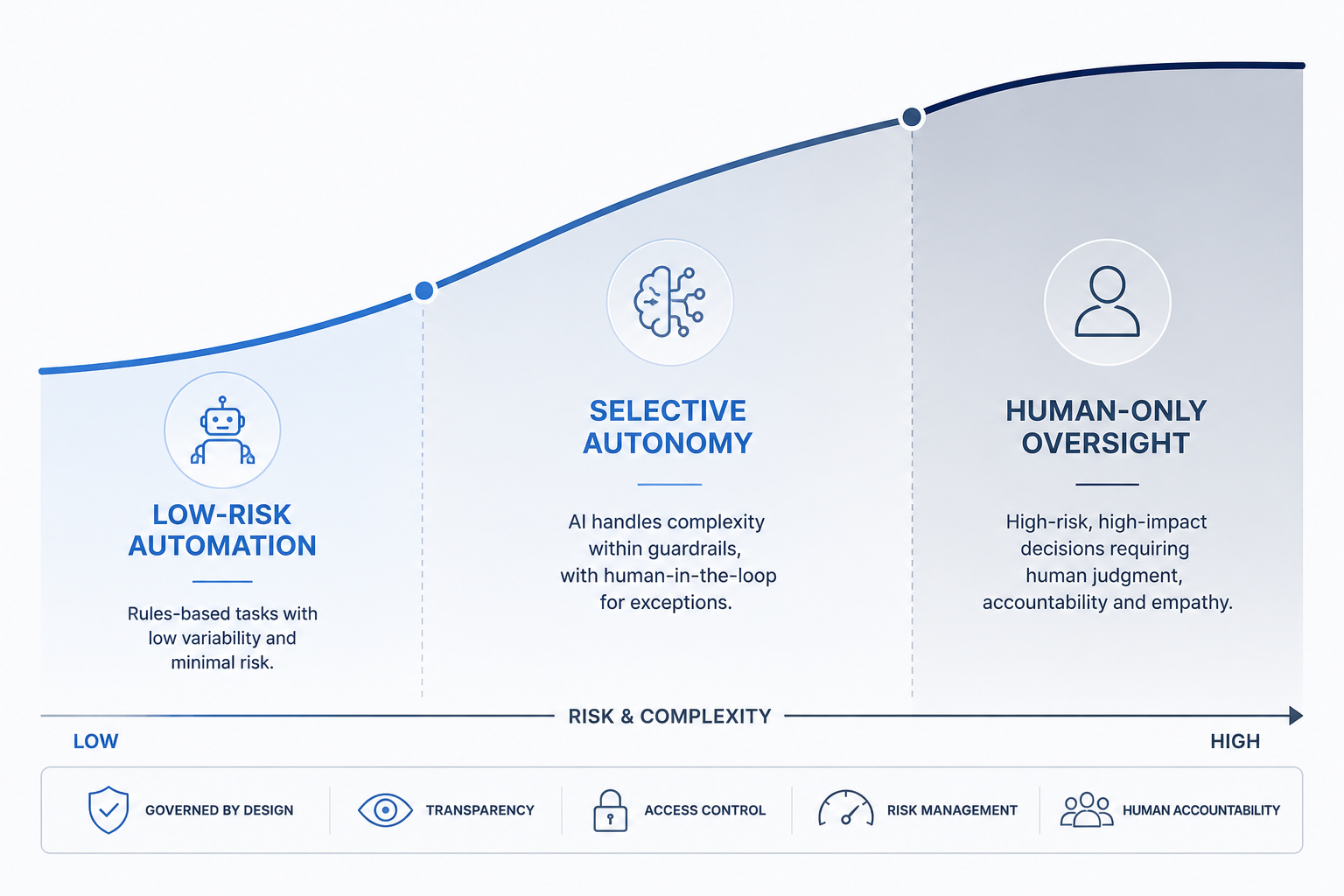
At one end of the curve are low regret tasks where autonomy feels natural. Move along the curve, and organisations become more selective. At the far end, autonomy stops entirely in domains involving ethics, safety, or strategic judgment.
Two forces shape where organisations land on this curve: trust built through transparency and predictable behaviour and context, which determines how much autonomy is appropriate based on the sensitivity of the domain.
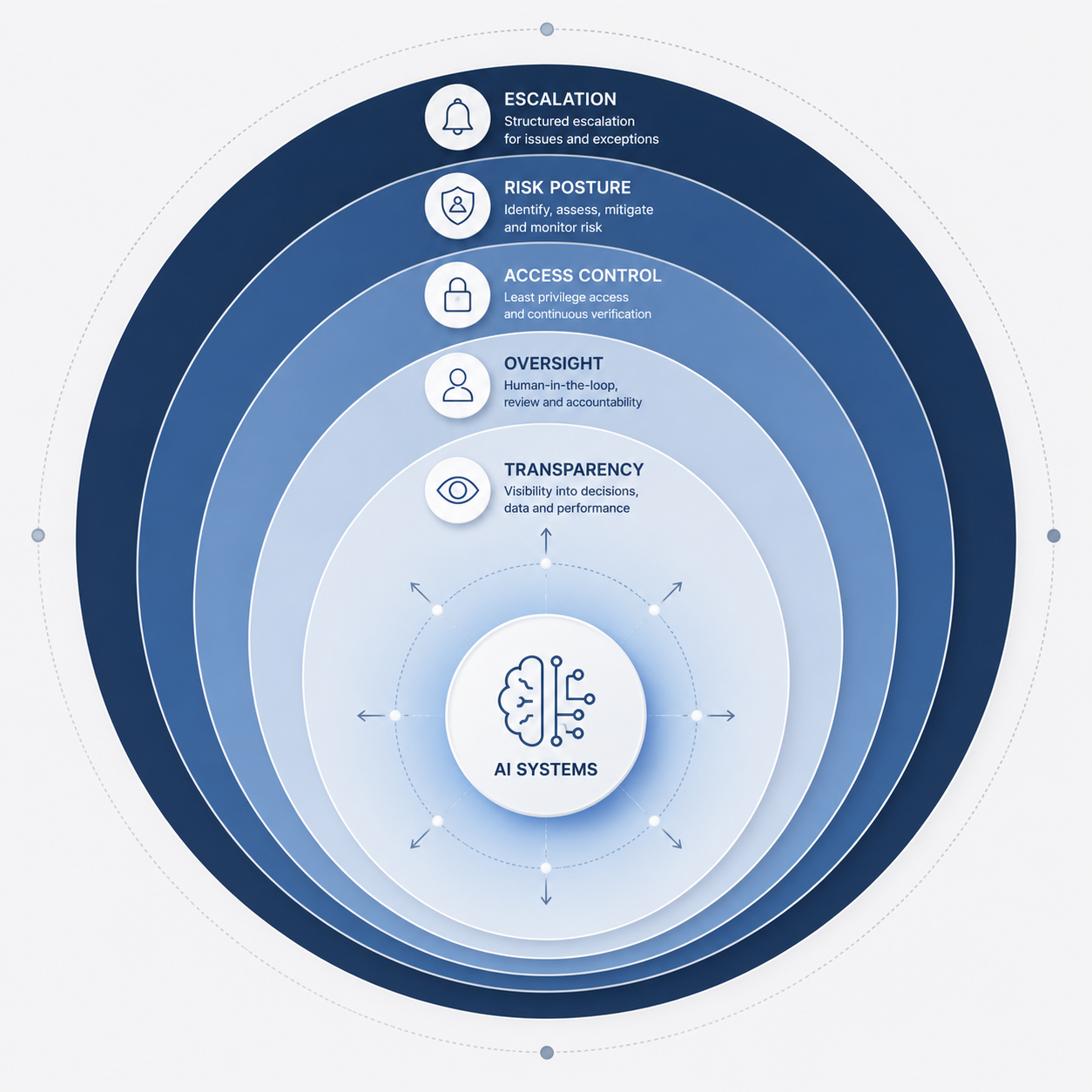
AI governance is becoming a strategic capability, not a compliance exercise. Leaders define clear boundaries, establish transparent rules, and align governance with business context to enable safe acceleration.
The organisations that lead will deploy AI deliberately with selective autonomy, strong oversight, and governance models that evolve as the technology evolves.
The future of AI is not fully autonomous. It is selectively governed accelerated where it creates value, constrained where it protects the enterprise, and always aligned with human judgment.
Explore the Future of AI Governance